Image: Istock
Investor solutions to the temporary accommodation crisis
There are multiple ways local authorities can unlock institutional investment to create temporary accommodation that is a financial asset rather than a burden

FINANCE

Pete Gladwell
Group Managing Director Public Investments, L&G
Pete Gladwell
Group Managing Director, Public Investments, L&G
Issue 83 | April 2026
Housing forms a fundamental basis for people’s lives. Equality, social equity, and capability are both enabled by the provision of a suitable home and fatally undermined without one. While this is self-evident and a key factor that attracts many of us to the cause, it is never clearer than in the provision of suitable homes for those in temporary accommodation (TA).
2025 was the worst year on record in terms of both the number of families living in TA, and the growing and unsustainable costs facing local authorities. More than 132,000 families and 173,000 children were recorded living in TA in England alone, and spending by local authorities reached around £2.8 billion in 2024-25.
Alongside stark inconsistencies in the quality of accommodation being provided, ‘temporary’ accommodation is increasingly no longer living up to its name: hidden homelessness is growing, and short-term fixes are becoming the norm rather than the exception.
spent by local authorities on temporary accommodation in 2024-25
“While there is no single solution to the challenges of TA, there are many ways we can innovate to improve its funding and delivery.”
Local solutions
Urgent action by a range of actors, including central government, local authorities, and institutional investors, is needed now more than ever. While there is no single solution to the challenges of TA, there are many ways we can innovate to improve its funding and delivery. As the challenge is locally focused, it also requires local solutions.
Successful mobilisation of institutional capital into affordable and social housing has shown how stable, long-term investment can be aligned with public interest outcomes nationally. The same principles could be applied to TA locally. This would drive a shift away from spot-purchased, short-leased, inconsistent provision towards longer term arrangements that improve quality and provide greater stability, including bringing street properties back into ‘social’ use through repurchasing old Right to Buy stock.
Local authorities have the power and investment solutions at hand to dramatically reduce their revenue costs and improve people’s lives by seeking deeper collaboration with pension funds, and drawing support from the Ministry of Housing, Communities and Local Government (MHCLG) and Homes England. Together, these partnerships can develop and deploy innovative solutions that go beyond traditional and high-risk Public Works Loan Board (PWLB) financing; enabling lower cost, higher quality homes at pace and scale.
“While there is no single solution to the challenges of TA, there are many ways we can innovate to improve its funding and delivery.”
Local solutions
Urgent action by a range of actors, including central government, local authorities, and institutional investors, is needed now more than ever. While there is no single solution to the challenges of TA, there are many ways we can innovate to improve its funding and delivery. As the challenge is locally focused, it also requires local solutions.
Successful mobilisation of institutional capital into affordable and social housing has shown how stable, long-term investment can be aligned with public interest outcomes nationally. The same principles could be applied to TA locally. This would drive a shift away from spot-purchased, short-leased, inconsistent provision towards longer term arrangements that improve quality and provide greater stability, including bringing street properties back into ‘social’ use through repurchasing old Right to Buy stock.
Local authorities have the power and investment solutions at hand to dramatically reduce their revenue costs and improve people’s lives by seeking deeper collaboration with pension funds, and drawing support from the Ministry of Housing, Communities and Local Government (MHCLG) and Homes England. Together, these partnerships can develop and deploy innovative solutions that go beyond traditional and high-risk Public Works Loan Board (PWLB) financing; enabling lower cost, higher quality homes at pace and scale.
Investable models
Institutional investors like L&G are naturally drawn to assets that offer predictable returns, scale, and social value. While TA has traditionally been seen as fragmented and high-risk, there is growing interest in creating more standardised, investable models which could serve as a blueprint.
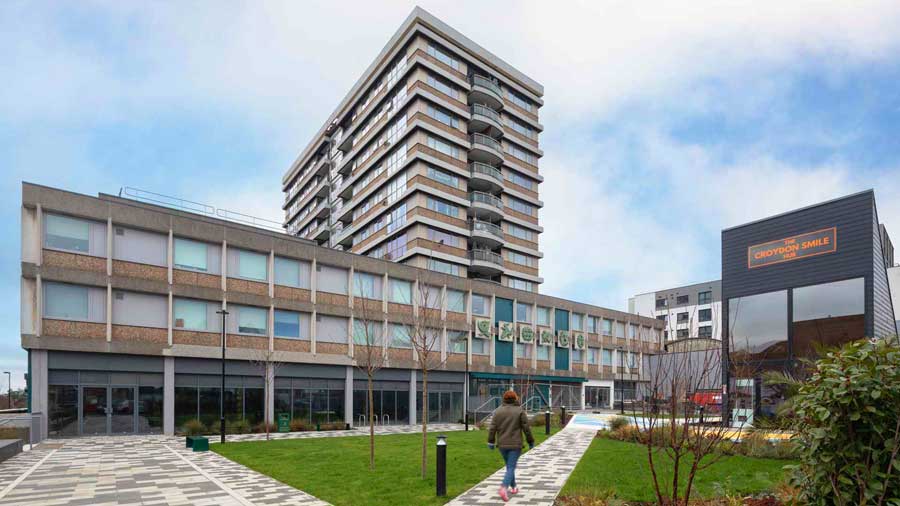
L&G implemented one such model in South London, delivering 250 homes as an alternative to Temporary Accommodation; the use of a long-term lease and low gilt rates enabled rents to be set below 60% of Local Housing Allowance (LHA) rates.
There is a challenge currently, as every borough and local authority grapples with the right approach and how best to secure investment that meets local needs. However, there are multiple options available to unlock investment at scale, and even a potential role for the new Housing Bank in enabling the introduction of lower cost investment from insurers under the Matching Adjustment framework, resulting in cheaper and more predictable rents.
While the challenge is vast, the solutions are there for the taking. By rethinking funding and delivery models, we can begin to turn TA from a cost burden into assets that generate surpluses for local authorities, improve the lives of thousands of people, and, crucially, make the TA crisis temporary again.
“While TA has traditionally been seen as fragmented and high-risk, there is growing interest in creating more standardised, investable models which could serve as a blueprint.”