Image: Istock
Ireland’s housing strategy
Ambition, intervention and the stakes ahead

GOVERNANCE & STRATEGY

Vincent Keenan
Chief Executive of North & East Housing Association (NEHA), Chartered Director and Chartered Member of the Chartered Institute of Housing
Vincent Keenan
Chief Executive, North & East Housing Association (NEHA), and Chartered Director, Chartered Institute of Housing
Issue 82 | February 2026
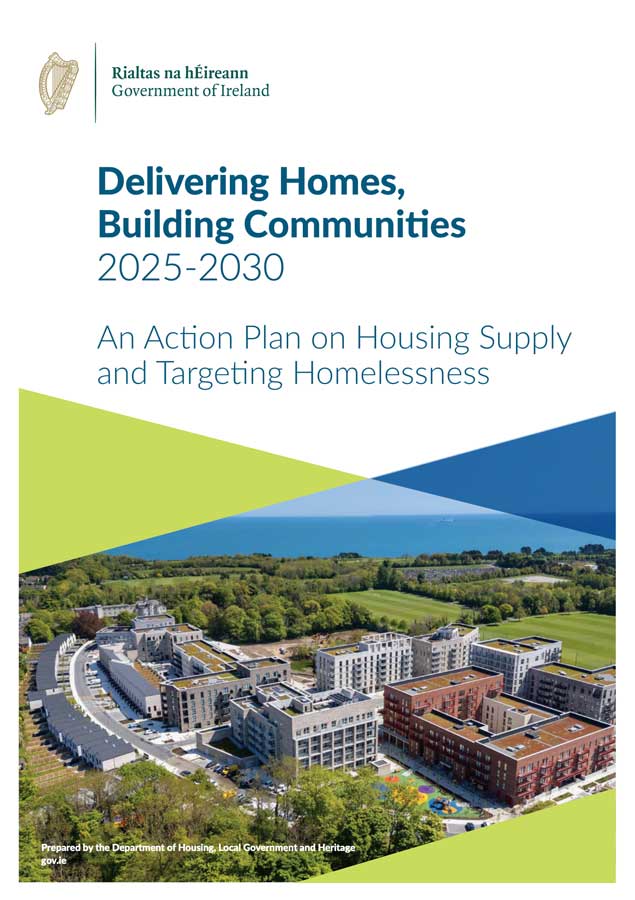
In November 2025, the Irish Government launched its revised housing plan, Delivering Homes, Building Communities. Reading the plan gives a clear sense of both the scale of ambition required and the complexity of delivery in Ireland’s housing system. The target of 300,000 homes by 2030 is an ambitious number. The plan signals a shift to remove structural barriers, accelerate supply and make housing a cornerstone of social and economic stability.
This plan builds on its predecessor, which also set targets to 2030, but the efforts in the plan are redoubled. Housing is now front and centre in Ireland, as it is across Europe. The European Commission’s Affordable Housing Plan published in December 2025 underscores this, aiming to review state aid rules that many believe have constrained member states from intervening in housing markets, to tackle high prices and limited availability for certain income groups.
Critics will debate whether targets are met or missed, but one fact is clear – Ireland’s approach has changed fundamentally compared to 10 or 15 years ago.
Policy has shifted from relying on the market, supplemented by social and affordable housing, to a highly interventionist approach across all aspects of delivery, to try to ensure homes are built and accessible to all.
Ireland’s approach is being held up in Europe as an example of how a state-led, interventionist approach is necessary to ensure accessible, affordable housing delivery. This shift changes how we all think about housing delivery and its critical role for our economy and, more importantly, for our societal wellbeing. The question is, is it enough to deliver what is required?
New homes in Cork
AHBs at a crossroads
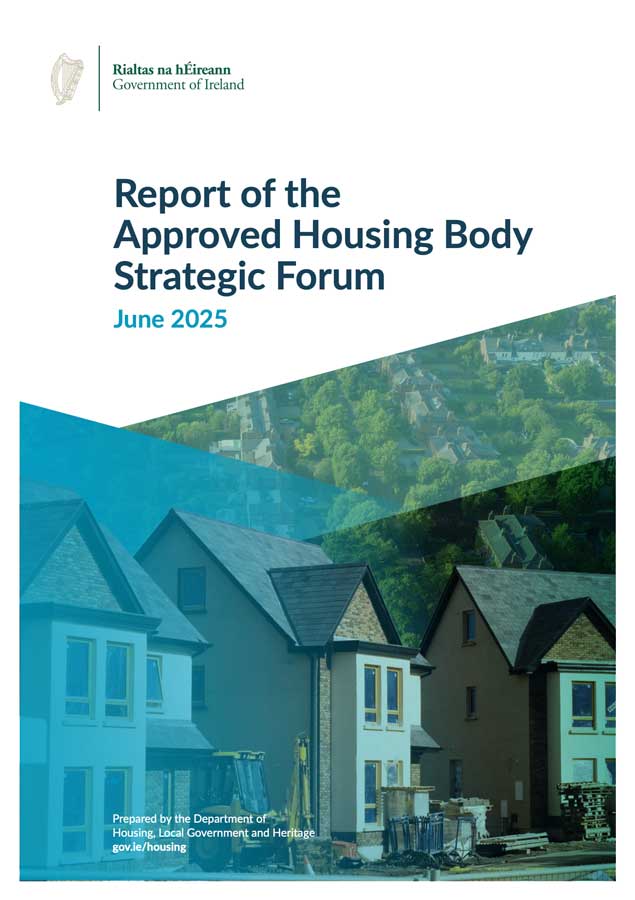
On the same day as the launch of Delivering Homes, Building Communities, the Department of Housing published another much-anticipated plan: the Strategic Review of the Approved Housing Body (AHB) Sector.
This review, developed through a facilitated process with sector representatives, including this author, draws on years of experience working within the AHB sector and navigating its evolution. It sets out for the first time the key strategic issues affecting the sector, including legacy challenges, current pressures, and future requirements. Organisations such as North & East Housing Association (NEHA) will be central to implementing these priorities at local and regional level.
The sector’s evolution since the 2008 financial crash is striking. The end of capital funding from the state (other than special needs housing) pushed AHBs toward private finance, requiring a regulatory framework introduced voluntarily in 2014 and made statutory in 2023.
This shift gave AHBs greater control over delivery, enabling them to deliver up to 50% of social housing, and pioneering cost-rental models. It also created new challenges in financial sustainability, governance and capacity that the review seeks to address.
Eight recommendations to the sector
The AHB Strategic Forum report identifies eight priority recommendations for action under an implementation group:
- Align delivery with national and local priorities
- Address income gaps to protect housing quality
- Recycle public investment for future housing
- Build capacity through collaboration and restructuring
- Strengthen governance and oversight
- Reform capital funding for sustainable growth
- A Green Deal for AHBs to achieve climate resilience
- A cross-departmental/agency working group to address financial and administrative barriers for care and support AHBs
Lead the change
With the review published, there is now an opportunity for AHBs to shape the next phase of our development in Ireland. So, what does this mean for those of us working in the sector?
It means the chance to influence real change. To make it work, we need to lead rather than follow. To make that happen, we need to act collectively and proactively, build capacity and address the challenges. The sector cannot afford to stand back. We need to influence implementation, anticipate risks, and ensure reforms strengthen rather than weaken progress.
The challenges ahead are real. Deferred maintenance (for some in the sector), income shortfalls, and an over-reliance on a small number of large AHBs could undermine progress in our evolution as a sector. Yet the potential is equally clear. These changes can move the sector into a new era of growth and innovation, reinforcing our mission and values while delivering for communities.
For the sector, success will mean delivering homes that are affordable, sustainable and aligned with individual and community needs. If we lead through collaboration and strong governance, the next five years can redefine our sector and our role in the future of housing delivery and community building in Ireland.
“The sector cannot afford to stand back. We need to influence implementation, anticipate risks, and ensure reforms strengthen rather than weaken progress.”